

This guide was substantially refreshed in July 2026 with the latest battery models and dimensions, the GivEnergy administration news, and current UK VAT rules.
A common concern for people moving towards sustainable energy systems in their home is size; and not just the size in terms of energy capacity, but the physical size of the units and how much space they take up.
Whether it’s heat pumps, electric water heaters or solar panels, they all seem to be quite bulky. With roof mounted solar arrays it’s largely fine as they’re out of the way, but what about domestic battery energy storage systems? What are their typical dimensions and how much room do they really take up?
Like most things, the answer depends. With a battery’s physical size, the answer depends on its total energy storage capacity, the technology used and the brand design.
This article will dig into the standard ranges of battery dimension, plus the other considerations that come with the full system. We’ll also look at the most popular systems installed in UK homes in 2026, as well as their weights, to give you the full picture on size.
How battery energy storage systems work in the home
Residential battery energy storage systems (BESS) are becoming more popular as homeowners look for ways to maximise their solar energy usage and reduce their reliance on the grid. BESS typically pair up with renewable energy sources like PV panels, but storage batteries can be used without a solar panel connection too.

For battery energy storage systems that are solar connected, the battery stores any excess energy generated by solar panels during the day, allowing you to use that energy during times when the sun isn’t shining.
Battery storage systems come in various sizes and capacities, largely depending on the household’s energy needs and the solar set up. Most UK homes now install between 5kWh and 13.5kWh, though modular systems can stack to 20kWh and beyond. Alongside the battery itself, you’ll need an inverter — it’s the inverter that switches stored DC electricity, or that generated by solar panels, into usable AC electricity. A growing number of units, like the Tesla Powerwall 3, now build the inverter into the battery itself, which cuts down on the space you need.
There are plenty of benefits to battery storage systems, with some of the main ones including:
- Maximising solar panel efficiency
- Reduced energy bills
- Earn money by selling excess energy back to the grid
As battery technology continues to improve and costs continue to decline, domestic battery storage is becoming an increasingly attractive option for homeowners looking to become more cost and energy efficient. For many, it’s a no-brainer investment. It’s also a good time to buy: home battery installations (with or without solar) are zero-rated for VAT in the UK until 31 March 2027, when the rate reverts to 5%.
What is the average size of a home battery storage system?
The size of a residential battery energy storage system will depend on energy requirements and battery capacity.
For a system with a capacity of at least 6kWh, which will provide the energy for some but not all of your electrical needs, you can expect the dimensions to fall in the range of:
- Height: 65cm – 120cm
- Width: 45cm – 85cm
- Depth: 12cm – 30cm
To put that into perspective, you can expect the physical dimensions of a residential battery storage system to fall somewhere within the range of a thin suitcase to that of a tall fridge freezer unit.
It’s possible to get smaller batteries installed that provide emergency power during outages. However, the majority of larger systems are designed to integrate with renewable energy installations, like solar panels. These bigger units offer greater storage capacity but also require more physical space.
It’s worth saying that manufacturers are continuously working to improve the energy density of battery storage systems. The goal here is to pack as much energy storage into as little space as possible. As energy density improves, smaller units are created. The 2026 market is moving in two directions at once: single-box systems like the Tesla Powerwall 3 pack 13.5kWh and an inverter into one fridge-freezer-sized unit, while modular tower systems (like the Sigenergy SigenStor or myenergi Libbi) let you start small and stack extra modules later — the footprint stays the same, the tower just gets taller.
How much space do you need for battery storage?
When installing a battery storage system, it’s not just the battery itself that you’ll be installing. Depending on your setup you may also have a control box and a separate inverter (or two). Some systems, such as the Tesla Powerwall 3 and Sigenergy SigenStor, have the inverter built into the unit itself, so everything lives in one box.
As a guide to the space needed for installation, the battery inverter and batteries should be within 1m of each other.
You’ll also need to leave appropriate spacing for heat dissipation and safety considerations, as will be outlined in the manuals, as well as account for switches, fuse boxes and cables.
With all this in mind, it’s essential to have a good open area with a solid wall, not just a corner or the exact space for the physical dimensions of the battery unit and nothing else.
The best locations for a home battery system
I bet you’re assuming that your battery storage needs to go in the loft aren’t you?
Well, not necessarily. When it comes to finding the best location for your home battery system, there are a few factors at play.
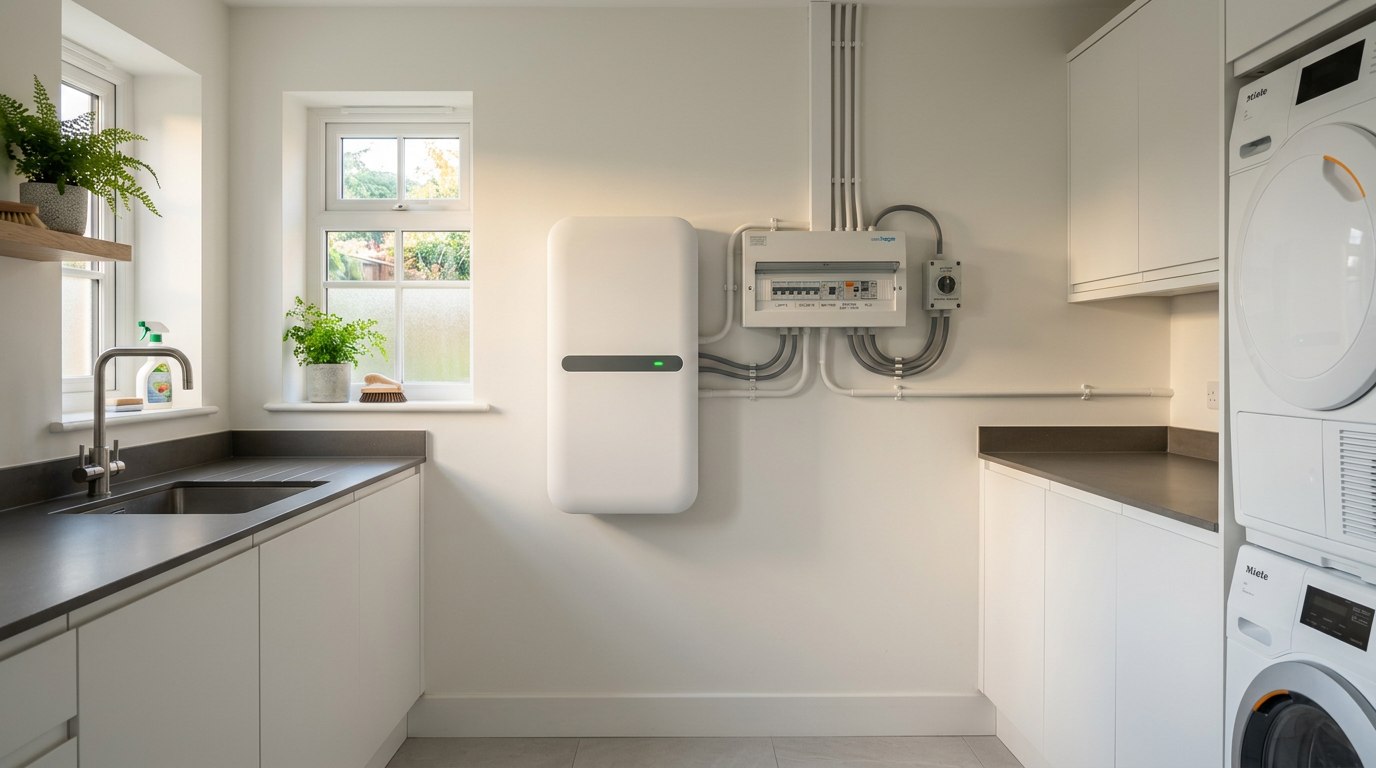
The ideal spot should be close to your main consumer unit (fuse box) and have enough space to accommodate the battery, inverter and other components discussed above. Some common locations for installing a home battery system include:
- Lofts – Historically the most popular spot, because batteries were often installed alongside solar arrays and the loft is where the solar inverter lived. That is changing: modern batteries are heavy (the Powerwall 3 is 132kg) and current UK installation guidance (PAS 63100:2024) steers installers away from lofts, bedrooms and escape routes. Expect your installer to recommend a ground-floor location instead.
- Utility rooms – Good spaces, often close to existing electrical systems. This makes it easier to connect the battery to the consumer unit with less cabling.
- Cupboards – Dedicated storage spots, such as under-stairs cupboards or hall cupboards, can work well provided they have adequate ventilation to prevent overheating.
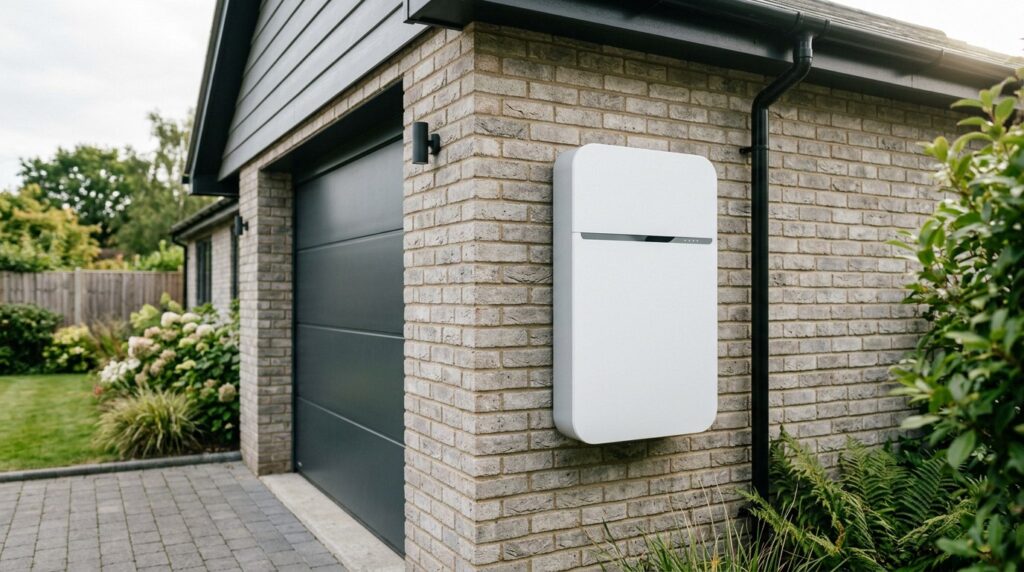
- Garages – Often the best location for battery systems, as garages tend to have plenty of space, solid walls and stay cool. Many current systems are also IP-rated for outdoor installation. However, it is likely you will have to run a long cable, which can pose issues.
The battery storage positioning will depend on the physical circumstances of your home. Wherever it goes, it should be:
- Accessible for maintenance
- A location with moderate temperature fluctuations to optimise performance and lifespan
- Well-ventilated to prevent overheating
- Away from areas prone to moisture
How much do battery storage systems weigh?
The weight of residential battery systems can vary considerably depending on their capacity and design. One thing is clear though, they’re not light.
Most modern storage systems use lithium-ion batteries. These are the same types of batteries found in mobile phones and electric vehicles. Lithium-ion batteries have a good energy density, meaning they can store a lot of energy for their size. It just means they’re heavier than they look most of the time.
Generally speaking the bigger the storage capacity, the heavier the system will be. For a ballpark figure, standard home battery storage units range from around 45kg for a compact 5kWh cabinet up to 140kg and more for larger all-in-one and stacked systems. The Tesla Powerwall 3, for example, weighs 132kg installed.
At this weight, you need a suitably strong wall to attach the battery to, as well as a solid floor to take the load. You can see example weights in the table below.
Home battery storage system examples (2026 models)
| System | Height | Width | Depth | Weight | Usable capacity | Inverter built in? |
|---|---|---|---|---|---|---|
| Tesla Powerwall 3 | 110.5cm | 61cm | 19.3cm | 132kg installed | 13.5kWh | Yes |
| Sigenergy SigenStor (controller + one 8kWh module) | ~75cm | 77cm | 26cm | ~106kg | 7.8kWh (stacks to 46.8kWh) | Yes |
| myenergi Libbi 10 | 157cm | 54cm | 24cm | 140kg | 9.2kWh | Yes |
| Fox ESS EP11 | 62.5cm | 71cm | 14.7cm | 99kg | 10.4kWh | No – separate inverter |
| Sunsynk 5.32 | 60cm | 44cm | 13.3cm | 44kg | 4.8kWh | No – separate inverter |
A note on GivEnergy (2026 update)
Earlier versions of this guide featured the GivEnergy All in One (110cm x 60cm x 28cm, 173kg, 13.5kWh). GivEnergy entered administration in April 2026 and has ceased trading, so we no longer include it in our comparison for new installations.
If you already own a GivEnergy system, don’t panic — it will keep working, as the hardware doesn’t rely on GivEnergy’s servers to store and release energy. Hardware warranties are no longer being honoured by the company though, so speak to your installer about ongoing support.
Hopefully, that gives you a good idea on how big battery energy storage systems are and how much space they’re likely to take up in your home.
Home battery size FAQs
What size solar battery do I need for my home?
As a rule of thumb, match usable capacity to your evening and overnight usage. A typical UK home uses 8–10kWh per day; paired with a 4–6kW solar array, a 9–13.5kWh battery covers most evening and overnight use.
Can a home battery be installed outside?
Many current systems (including the Tesla Powerwall 3 and Sigenergy SigenStor) are IP-rated for outdoor installation. Check the datasheet, and keep the unit out of direct sunlight where possible.
How heavy is a home battery?
Between roughly 45kg and 140kg+ depending on capacity. Wall-mounted units need a structurally sound wall, and floor-mounted towers need a level, solid base.
Do bigger batteries take up much more room?
Not proportionally. Modular tower systems add height rather than floor space, and a modern 13.5kWh one-box system takes up roughly the same wall area as an older 10kWh unit plus its separate inverter did.
Is battery storage still VAT-free in the UK?
Yes — 0% VAT applies to home battery installations (with or without solar panels) until 31 March 2027, after which the rate reverts to 5%.
